
Search engine optimization has traditionally focused on getting people to click on your website from Google. While website traffic is still an important part of SEO, search has changed considerably. Google now provides more information directly in its search results, allowing users to find answers, business information and other details without visiting a website. This is commonly known as zero-click search.
For businesses, zero-click search doesn’t mean that getting website visitors is no longer important. Instead, it means SEO should be about more than generating clicks. Being visible when someone searches for your products, services or expertise can help build awareness and credibility, even if that particular search doesn’t result in a website visit.
What Is Zero-Click Search?
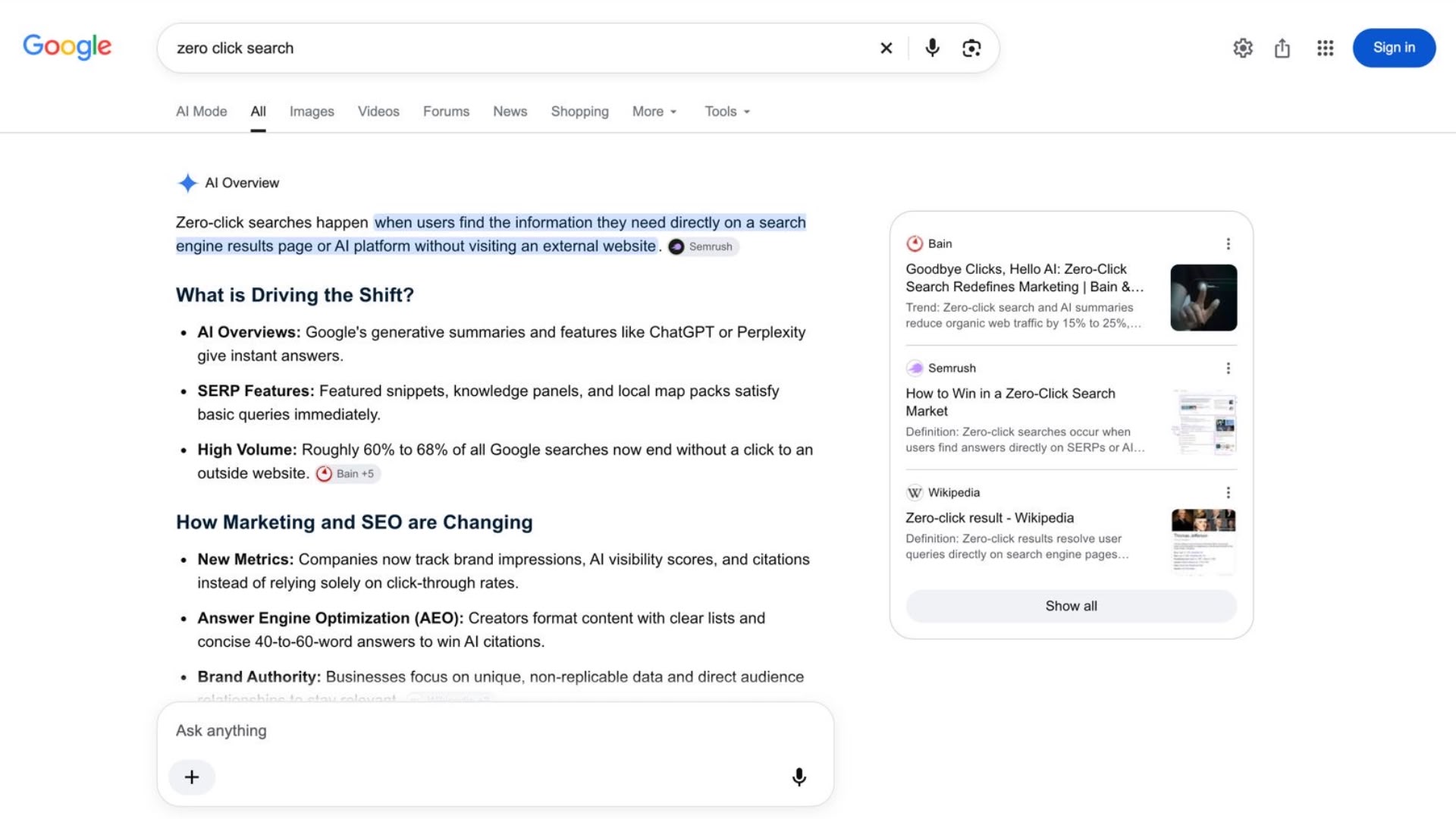
A zero-click search happens when someone finds the information they need directly on the search results page. This can include featured snippets, local business information, People Also Ask results, knowledge panels and other search features. Google’s newer AI search features can also provide information directly within the search experience.
For example, someone searching “how long does SEO take?” may see an answer without clicking on a website. Someone searching for a local business may see its phone number, hours, reviews and location directly in Google. While the user may not visit the website during that search, the business has still had an opportunity to appear in front of a potential customer.
Create Content That Answers Real Questions
One of the most practical ways to prepare your website for zero-click search is to answer the questions your customers are actually asking. Think about the questions you receive through phone calls, emails, consultations and sales conversations. These questions can provide excellent ideas for blog posts, service pages and FAQ content because they reflect what potential customers genuinely want to know.
When answering a question, don’t make the reader search through a long introduction to find the answer. Provide a clear explanation and then expand on the topic with additional information, examples or advice. For example, an SEO company could explain how long SEO typically takes to produce results, while a landscaping company could explain how often a lawn should be watered. The content should be written for the customer first rather than simply trying to include a keyword as many times as possible.
Some useful content opportunities include:
- Frequently asked questions from customers
- How-to questions related to your services
- Comparisons between products or services
- Definitions of common industry terms
Make Your Content Easy to Understand
The way you organize your content can also help search engines understand what a page is about. Use clear headings, descriptive titles and natural language, and organize information in a logical order. Lists can be useful when they genuinely make information easier to understand, particularly for steps, recommendations or several related points.
It is also worth focusing on specific search queries rather than only targeting broad keywords. Google Search Console can show you the searches where your website is already receiving impressions, while customer questions and Google’s suggested searches can provide additional ideas. Building content around these specific topics can help your website appear for a wider range of relevant searches.
Local SEO Matters Too
Zero-click search is especially relevant to local businesses. Google can display important information about a company directly in local search results, so keeping your Google Business Profile accurate and maintaining consistent business information is important. Your website should also clearly explain what services you provide and the areas you serve.
For local businesses, this means paying attention to areas such as:
- Keeping your business information accurate
- Maintaining an active and complete Google Business Profile
- Building genuine customer reviews
- Creating useful service and location-specific content
A potential customer might see your business in search several times before eventually visiting your website or contacting you. That visibility still has value, even if the original search didn’t generate a click.
Look Beyond Website Traffic
Zero-click search is another reason businesses should look beyond website traffic when evaluating SEO. Rankings, search impressions, branded searches and local visibility can provide useful information about how often your business is being seen. A person may discover your company through a search result, remember the name and return later through a branded search or direct visit.
SEO is increasingly about search visibility, not just website visits. The goal is to provide useful information, establish your business as a relevant result and give people a reason to visit your website when they are ready to take the next step. The click still matters, but it is no longer the only measure of successful SEO.